THE CRAFT / HOW A HOME COMES TOGETHER

Material, Craft and the Details That Matter

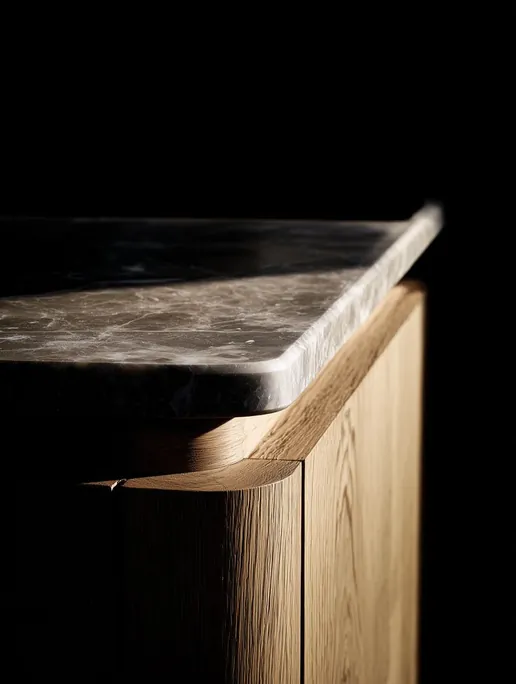
The small decisions are not small once you live with them. A table edge catches your hand. A curtain falls beside a window. A drawer closes a hundred times. The quality of an interior is felt through these details long after the first photograph.

We consider furniture, fabrics, materials and finishes as part of one design language. Each has to make sense for the room, the owner and the practical conditions in which it will be used.

Discuss Materials for Your Home

EDITORIAL REFERENCE · BRANDBOOK · NOT A VERIFIED CLIENT PROJECT

01 / BEGIN WITH THE USE, NOT THE FINISH SAMPLE

Begin with the use, not the finish sample

A material may look beautiful on its own and still be wrong for the place where it is proposed. Before choosing, we ask what it will touch, how often it will be used, what care it requires and how it meets the materials beside it.

That might mean choosing a tabletop finish for the way a family actually eats, thinking through a curtain's weight and movement, or selecting a piece of hardware because it is comfortable in the hand and appropriate for the conditions of the room.

The aim is never to use the most materials. It is to choose the ones that earn their place.
02 / THE VALUE OF MAKING SOMETHING HERE

The value of making something here

Local making is part of the way we approach furnishing in Belize. We have worked with local fabricators on pieces such as beds, dining tables, coffee tables and curtains. Custom work offers the opportunity to consider a room's dimensions and the desired result before a piece is made.

The work asks for clear instructions and real communication: dimensions, wood selection, finish, joinery, fabric, tolerances and the way the piece must arrive and be installed. Good craft depends as much on those decisions as on the maker's hands.

Among the local suppliers and workshops we have worked with are Gutierrez WoodWorks, Granier's DreamLand and SewWhat. When a specific piece is shown, we want the relevant maker to receive accurate credit.

03 / IMPORTED PIECES HAVE THEIR PLACE

Imported pieces have their place

Not everything should be made locally. Imported sofas, dining and accent chairs, decorative lighting and accessories have been part of our furnishing work. Sometimes the right form, tested construction or particular product specification is best found elsewhere.

Importing also changes the project. Availability, dimensions, shipping, customs, receiving and replacement options need consideration alongside the visual choice. A beautiful piece with an uncertain delivery path may not be the right piece for a time-sensitive installation.

Read Our Guide to Local vs Imported Furniture

04 / WOOD, TEXTILES AND THE ROOM AROUND THEM

Wood, textiles and the room around them

Belize offers locally sourced timber and forms of making that can shape an interior's character. In our sourcing work, local mahogany and other timber, and imported wicker from Mexico, have been among the material options considered. Their suitability depends on the product, fabrication, finish and site conditions; the material name alone does not guarantee performance.

Textiles bring another kind of detail. A quiet room can become warm through the texture of a curtain, a rug or upholstery. We consider color, hand, maintenance, use and how each material sits with the rest of the space.

For coastal homes, manufacturer care information and exposure-specific specifications matter. A sheltered bedroom and an open, salt-exposed terrace are not interchangeable environments.

Choosing Materials for Belize's Coastal Climate

05 / THE MAKER SHOULD NOT DISAPPEAR FROM THE STORY

The maker should not disappear from the story

A locally produced bed or dining table has a maker behind it. When we show the work, we want the origin to be understood rather than reduced to a vague claim of craftsmanship. That means naming and crediting a workshop where appropriate, explaining what was made and distinguishing a locally fabricated item from an imported one.

Good design respects both the person using a piece and the person who made it.

06 / MATERIALS DO NOT LIVE ALONE

Materials do not live alone

At the Howard Residence in Mahogany Bay, darker timber and white tile became part of a lighter, coastal direction when sourcing conditions required a change. The furnishing palette then carried the atmosphere through beige and soft earth tones.

The house remained coherent because the choices were considered together—not because every item matched the first moodboard exactly.

Explore Howard Residence

07 / WHAT WILL YOUR HOME NEED TO HOLD UP TO?

What will your home need to hold up to?

Every material choice begins with a question about use, setting and the people who live there. Tell us what you are planning, what you care about and what needs to last in your particular home.

Discuss Materials for Your Home

EDITORIAL REFERENCE · BRANDBOOK · NOT A VERIFIED CLIENT PROJECT

EDITORIAL REFERENCE · BRANDBOOK · NOT A VERIFIED CLIENT PROJECT

THE LIFE INSIDE · NEXT STEP

Start with the life
you imagine.

Tell us where your property is, what stage it has reached, and what you would like to create.

Tell Us About Your Home

↗